
The Hall of Justice
Where the world's greatest heroes sit down, argue over coffee, and save the planet before lunch—if they can agree on the agenda.

Leviclancy · CC0
The Hall of Justice is the Justice League's primary Earth-based headquarters in the Young Justice animated series, situated in the Washington, D.C. metropolitan area. It serves as the administrative and operational nerve center where the League convenes for strategy sessions, debriefs, and the coordination of global crises—complementing the orbital Watchtower as the team's two principal bases. Throughout the series, the Hall is the backdrop for some of the show's most consequential moments: League-wide votes, the young heroes' first formal interactions with their mentors, and the political maneuvering that shapes the team's autonomy. It is less a fortress than an institution—a place where gods in spandex argue over policy, where a teenager's first mission debrief happens in the same room where interstellar threats are dissected.
- First appears
- Season 1, Episode 1 ("Independence Day")
Lore & Background
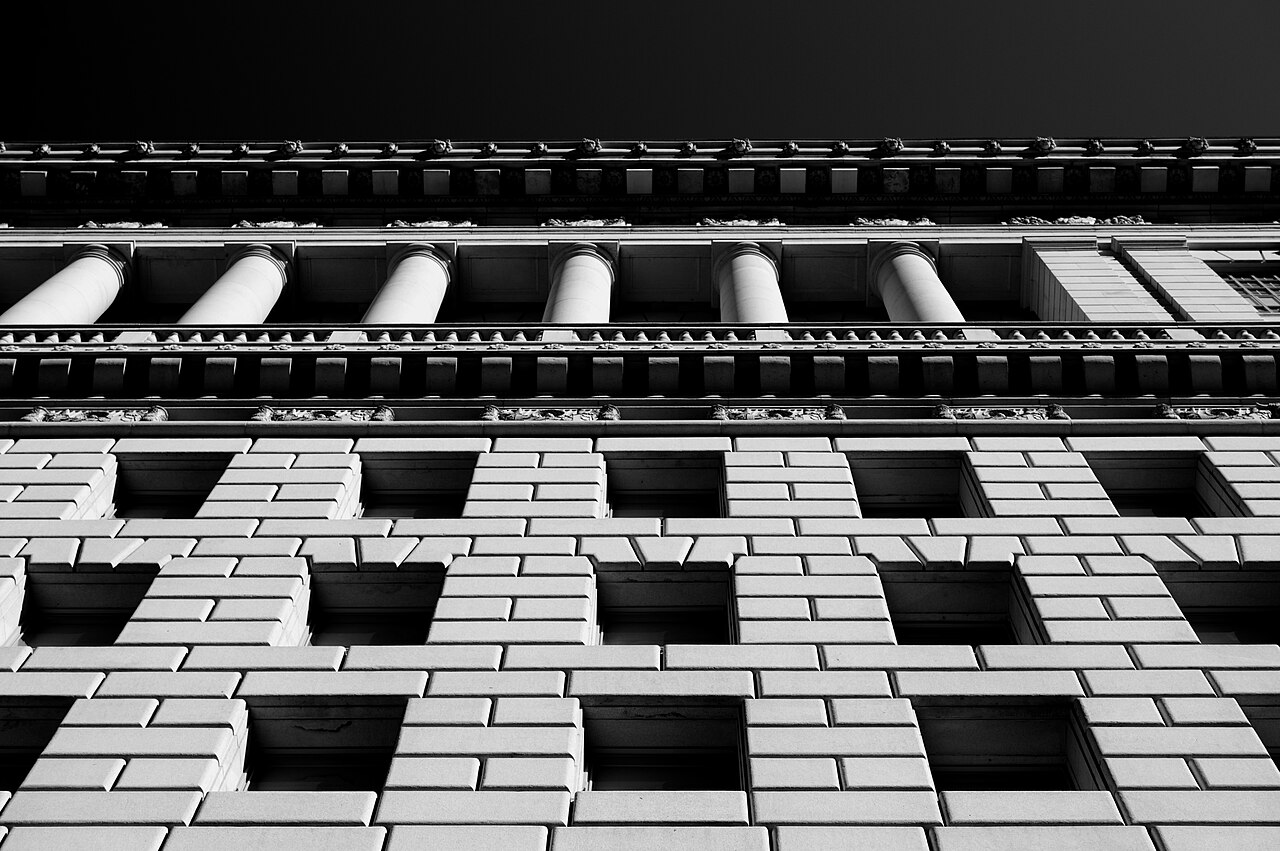
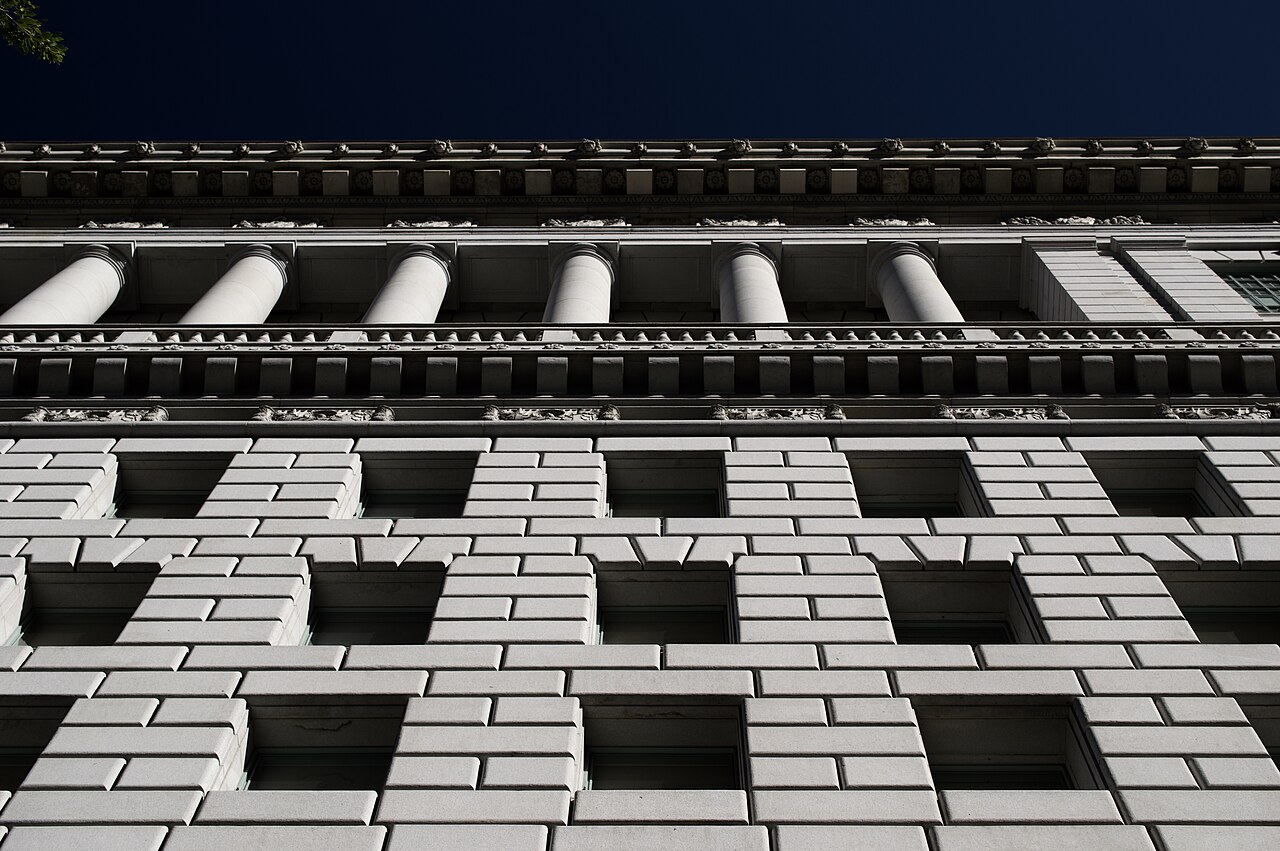
In the Young Justice continuity, the Hall of Justice occupies a prominent position in the D.C. skyline—a sleek, modernist structure that projects institutional authority without the ostentation of a billionaire's private tower. Its design language is clean and civic: broad glass facades, angular steel framing, and a low-profile silhouette that blends into the federal architecture surrounding it. Inside, the most frequently seen space is the main conference chamber, dominated by a large circular table where League members take their seats. The geometry of that room matters narratively: every character is visible to every other, and the show's writers use the circular framing to emphasize consensus, dissent, and the weight of collective decision-making. The Hall is not merely a set piece. It is where the tension between the League's institutional role and the Young Justice team's desire for independence plays out most directly. Missions are assigned here, trust is tested here, and the political machinery of the League—its votes, its protocols, its occasionally rigid hierarchies—operates from these halls. Batman's presence in the building carries a particular gravity; his sections of the facility are darker, more utilitarian, a visual counterpoint to the brighter, more open common areas. The contrast between the Hall's civic openness and the Watchtower's isolated, military-grade security underscores the show's theme that heroism is as much about governance as it is about combat. By the later seasons, the Hall becomes a site of vulnerability as well as power. Threats to the building itself—internal infiltration, political sabotage, or the simple danger of being a known, fixed location—force the League to confront the limits of their institutional footprint. The Hall endures, but the show never lets the audience forget that a headquarters, however fortified, is still a target with a fixed coordinate.
In Their Own Story
The rain had been falling on the Hall of Justice's glass crown for an hour, and the city lights below smeared into long amber streaks across the conference floor. Superboy stood at the far end of the circular table, arms crossed, jaw tight. He'd been summoned for a debrief that felt, to him, more like a trial. Across the polished surface, Batman's cowl was a dark silhouette against the wet gleam of the windows; beside him, Captain Marvel's perpetual grin seemed out of place, like a sunbeam in a storm cellar. The air smelled of ozone from the storm outside and the faint metallic tang of Kryptonian frustration. A holographic display flickered between them, showing a tactical replay of the mission—a failed extraction, a civilian casualty that Superboy still saw when he blinked. He wasn't here to explain. He was here to be judged. But the Hall's circular table, designed for consensus, now felt like a cage of stares. No one spoke. The rain kept falling.
Reader's Guide
Narratively, the Hall of Justice functions as the show's institutional anchor—the place where the macro-politics of the DCU are rendered visible. Every major decision that shapes the Young Justice team's trajectory—mission assignments, trust agreements, the slow erosion of the League's paternalistic control—happens in its conference chamber or its corridors. It is controlled by the League collectively, but the show consistently visualizes power asymmetries within it: Batman's darker, more angular alcoves versus the brighter common areas; the circular table that implies equality but is dominated by whoever speaks first. Visually, the Hall reads as civic modernism meets superhero infrastructure. The palette is cool—steel blues, slate grays, white marble—punctuated by the warm glow of D.C. streetlight through the glass. Threat level is signaled through lighting: a calm scene uses broad, even illumination, while tension introduces hard shadows, narrowed camera angles, and the hum of secure-comms systems. The building's transparency (literal glass walls) contrasts with the Watchtower's opaque, military aesthetic, reinforcing that the Hall is a place of public-facing authority, not just combat readiness. What makes the Hall distinct in this show's DCU is its groundedness. Unlike the Watchtower, it sits in a city, among civilians, under a jurisdiction. That proximity to the mundane world—traffic, weather, the occasional protest outside the windows—reminds the audience that the League's work is ultimately political, not just martial.
Did You Know?
- The Hall of Justice and the orbital Watchtower serve complementary roles in the series: the Hall is the League's Earth-based administrative center, while the Watchtower handles more isolated, high-security operations.
- The circular conference table at the Hall's center is a recurring visual motif used to frame group decisions, emphasizing that every League member's perspective is meant to be visible to the others.
- The building's glass-and-steel architecture deliberately evokes federal and civic design, positioning the League as a public-facing institution rather than a private military force.
- The Hall's fixed, known location becomes a narrative vulnerability in later seasons, forcing the League to confront the security risks of maintaining a permanent headquarters.
Birth of a Covert Team
Young Justice emerged from the creative partnership of Greg Weisman and Brandon Vietti, developed for Cartoon Network as an American animated television series. At its core, the show tracks a group of teenage heroes organized into a covert operations unit that operates under the direct command of the Justice League. The series first reached audiences in an unusual format: the opening two episodes were broadcast as a single hour-long special on November 26, 2010. When the show officially premiered as a regular series on January 7, 2011, Cartoon Network ran a two-week reairing of those same first two episodes to bring new viewers up to speed. This dual-launch strategy gave the covert-team premise a longer runway to establish its world and its young operatives before the narrative moved forward into its first full season.
The Long Silence and the Return
After Season 2, branded Invasion, wrapped in 2013, the series entered a prolonged period of inactivity that stretched for more than three years. The show's absence left its teenaged operatives in narrative limbo, with no new episodes to advance their story or resolve the threats introduced during the Invasion arc. The wait finally broke in November 2016, when Warner Bros. Animation publicly confirmed that the series would return to production. The announcement marked the end of what had become one of the more extended hiatuses in animated television. New episodes ultimately arrived in 2019, reuniting the covert operations team with the audiences who had been waiting since 2013. The multi-year gap between the Invasion finale and the 2019 revival gave the production team considerable time to restructure the narrative for what would become the final two seasons of the run.
Seasonal Architecture and Hidden Ciphers
The series unfolded across four distinct seasons, each carrying its own thematic identity. Season 1 launched the covert-team concept in 2010 and ran through 2012. Season 2, titled Invasion, followed from 2012 into 2013. After the hiatus, Season 3 arrived in 2019 under the name Outsiders, while Season 4, called Phantoms, spanned 2021 through 2022. Beyond their surface narratives, the later seasons embedded deliberate hidden messages in their episode titling. In Outsiders, the first letter of every episode title, read in sequence, spells out the phrase "Prepare the Anti-Life Equation." Phantoms employs the same technique, with its episode initials forming "Invitation to Kneel Before Zod." These acrostic threads reward attentive viewers who track the series episode by episode, weaving a secondary layer of storytelling beneath the main plot and tying the season's episodes into a single hidden directive.
The Complete Run
By June 9, 2022, Young Justice had delivered a total of 98 episodes to audiences, marking the conclusion of its fourth and final season. This figure represents the full scope of the series' storytelling, from the original hour-long special that introduced the teenaged heroes to the final Phantoms episodes that closed out the arc. The complete run spans a remarkable timeline: the first material aired in late 2010, the series endured a multi-year gap after 2013, and the final chapters landed in 2022. Across those 98 episodes, the covert operations team navigated threats ranging from the Anti-Life Equation to Zod, all while operating under the Justice League's authority. The series' journey from a two-episode Cartoon Network special to a four-season, 98-episode saga reflects both the show's endurance and the patience of its fanbase through the long hiatus.
Gallery
Frequently Asked Questions
What is the Hall of Justice in Young Justice?
It's the Justice League's primary ground-level headquarters on Earth, functioning as their administrative hub for strategy meetings, debriefs, and coordinating responses to world-threatening crises. Think of it as the League's home office that operates alongside the orbital Watchtower.
Where exactly is the Hall of Justice located?
It sits somewhere in the Washington, D.C. metropolitan area, which keeps the League conveniently close to government and political matters throughout the series.
How does the Hall of Justice differ from the Watchtower?
The Watchtower is the League's space-based operational platform, while the Hall handles Earth-side administration, diplomacy, and internal League business. The show treats them as complementary bases rather than duplicates—the Hall is where formal votes happen and where the young heroes first interact with their mentors in an official capacity.
What rooms and features can you find inside the Hall?
The most recognizable space is the large circular conference chamber where the full League gathers, but the building also includes individual member quarters and secure communications arrays for coordinating with field teams.
Why does the Hall of Justice matter to the Young Justice story?
It's the backdrop for some of the show's most pivotal scenes—League-wide votes, the first formal mentor-mentee interactions, and political maneuvering that shapes the plot. It's active from Season 1, Episode 1 ("Convergence") all the way through the series finale.
More in World & Setting
Elsewhere in the Young Justice universe
Spotted an error? Know more?
This is a living reference — every entry is fact-audited, and reader corrections feed straight into our audit queue. Suggest an edit · See this site's audit record