
Justice League
When the world is ending, the League is already in the sky.

Pat Loika · CC BY 2.0
Justice League is an American animated superhero television series that aired on Cartoon Network from November 17, 2001, to July 9, 2004. Produced by Warner Bros. Animation, it draws directly from DC Comics' Justice League of America and its sprawling cast of heroes. The series is the eighth entry in the DC Animated Universe (DCAU) when counting *The New Batman Adventures* as a separate series, acting as a sequel to both *Batman: The Animated Series* (including *The New Batman Adventures*) and *Superman: The Animated Series*. After two seasons, it was succeeded by *Justice League Unlimited*, which expanded the roster and ran for a third combined season (often referred to as Season 3) that aired from 2005 to 2006.
- Organization type
- Senior superhero coalition / global defense force
- Notable members
- Superman, Batman, Wonder Woman, Green Lantern (John Stewart), Flash (Wally West)
- Role in series
- Mentors to the Young Justice team; handlers of world- and universe-level threats
Verified Timeline
Lore & Background
Bruce Timm—the mastermind behind *Batman: The Animated Series* and *Superman: The Animated Series*—took the reins for this team-up epic, assembling a core roster of seven: Batman, Superman, Wonder Woman, Green Lantern (John Stewart), The Flash (Wally West), J'onn J'onzz (Martian Manhunter), and Hawkgirl. According to DVD audio commentary for Season 2, the season finale 'Starcrossed' was originally intended as the series finale. But in February 2004, Cartoon Network surprised fans by greenlighting *Justice League Unlimited*, which premiered on July 31, 2004, and ballooned the cast to include dozens of DC heroes. This series also marked a technical first for the DCAU: widescreen production starting in Season 2.
In Their Own Story
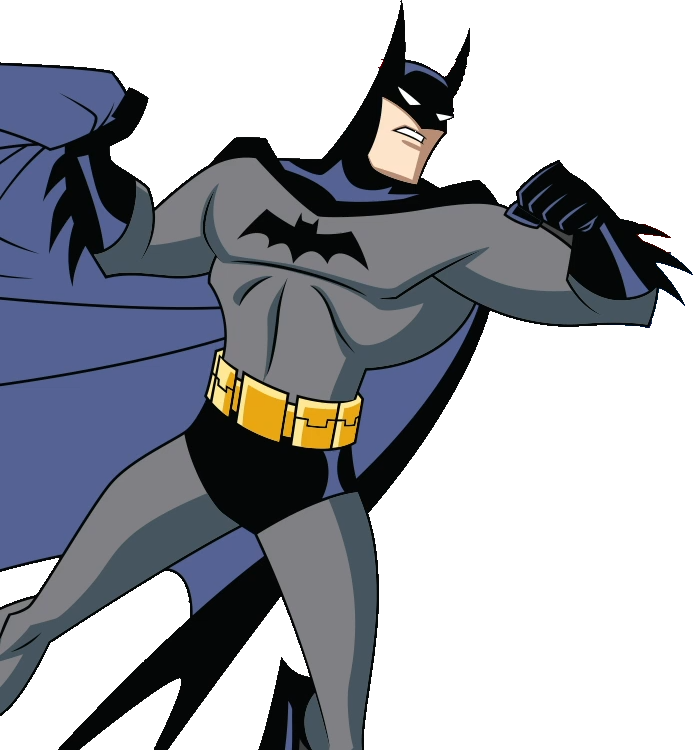
Kevin Conroy returned as Batman, reprising his iconic role from *Batman: The Animated Series*, *The New Batman Adventures*, and *Batman Beyond*. His costume here is a hybrid—retaining the sleek silhouette from *The New Batman Adventures*, but with the blue highlights of the original *Batman: The Animated Series* suit and the elongated ears from *Batman Beyond*. Tim Daly, the original voice of Superman in *Superman: The Animated Series*, was initially cast but had to bow out due to his commitment to *The Fugitive*. George Newbern stepped in, and though both actors have voiced the Man of Steel in various DC projects, Newbern went on to become the longest-running actor to portray Superman. Joining Conroy and Newbern were Susan Eisenberg as Wonder Woman, Maria Canals-Barrera as Hawkgirl, Phil LaMarr as John Stewart, Michael Rosenbaum (replacing Charlie Schlatter) as The Flash, and Carl Lumbly as J'onn J'onzz.
Reader's Guide
The series premiere on November 17, 2001, drew over 4.114 million viewers, setting a Cartoon Network record for the highest-rated premiere in the channel's history. That record stood until September 13, 2009, when *Scooby-Doo! The Mystery Begins* pulled in 6.108 million. Critics and fans alike hailed Season 1 for its gripping storytelling and faithful, nuanced portrayal of the superhero team. WhatCulture praised the season's exceptional execution, noting how it balanced epic scope with character-driven drama.
Did You Know?
- The series premiere on November 17, 2001, set a Cartoon Network record with over 4.114 million viewers, a record it held until 2009.
- The second-season finale 'Starcrossed' was expected to be the final episode of the series before *Justice League Unlimited* was announced in February 2004.
- Justice League is not the first DCAU series to use digital ink and paint—that honor goes to Batman Beyond (1999–2001)—but it is the first to be produced in widescreen starting in Season 2.
- George Newbern replaced Tim Daly as the voice of Superman because Daly was involved with *The Fugitive*; however, the longest-running DCAU voice actors for Superman are Tim Daly and George Newbern.
Origins & The Teen Hero Concept
Young Justice emerged from the creative partnership between Greg Weisman and Brandon Vietti, who developed the concept for Cartoon Network as an American animated television series. The show's central premise distinguishes it within the broader superhero landscape: rather than spotlighting established adult heroes, it places the narrative focus squarely on a group of teenaged heroes who operate as a covert operations team. These young operatives do not act independently; they receive their directives from the Justice League, positioning the series as a window into the next generation of heroes working under the guidance of the DC universe's most iconic team. The series first reached audiences on November 26, 2010, when the opening two episodes aired as an hour-long special. Following that premiere, the show transitioned into a regular series format, debuting on January 7, 2011, with a two-week reairing of those initial episodes to build momentum before fresh material began rolling out.
The Hiatus and the Road Back
One of the most defining chapters in Young Justice's history is the extended gap between its early seasons and its eventual return. After Season 2, subtitled Invasion, wrapped in 2013, the series entered a prolonged silence that left fans without new episodes for several years. That quiet finally broke in November 2016, when Warner Bros. Animation officially confirmed the show's return, reigniting anticipation among the audience that had followed the teen heroes since the original 2010 special. The wait, however, was not yet over. Fresh episodes did not arrive until 2019, when Season 3, titled Outsiders, finally premiered. That nearly six-year stretch between the end of Invasion and the arrival of Outsiders made the revival feel like a hard-won victory for the fanbase, and it set the stage for the ambitious fourth season that would follow in 2021.
Season Architecture & The Hidden Acrostics
Young Justice spans four seasons, each carrying its own identity and narrative scope. Season 1 ran from 2010 to 2012, establishing the teen team and their working relationship with the Justice League. Season 2, subtitled Invasion, aired from 2012 to 2013 and introduced a broader external threat. After the long hiatus, Season 3, titled Outsiders, arrived in 2019, while Season 4, subtitled Phantoms, stretched across 2021 and 2022. Beyond their titles and storylines, the later seasons embed a clever layer of interactivity for attentive viewers: the opening letter of every episode title, when read in order, forms a concealed message. In Outsiders, that phrase reads "Prepare the Anti-Life Equation," while in Phantoms it spells "Invitation to Kneel Before Zod." These acrostic rewards for fans who track every episode title add a puzzle-like dimension to the viewing experience, deepening engagement with the series' larger mythology.
Production Milestones & the Complete Run
The full arc of Young Justice represents a remarkable production journey within the DC animated universe. What began as a single hour-long special on November 26, 2010, grew into a multi-season series produced by Warner Bros. Animation and broadcast on Cartoon Network. By June 9, 2022, the series had reached a total of 98 released episodes, a milestone that marked the conclusion of its fourth and final season. The path to that number was anything but linear: the show navigated an initial run spanning 2010 to 2013, a multi-year absence, and then a two-season revival that brought the story to its intended close. The fact that the series ultimately wrapped at 98 episodes, spanning over a decade from its first broadcast to its final installment, underscores both the creative ambition of Weisman and Vietti's original vision and the enduring demand from audiences who wanted to see the teen heroes' story told to completion.
Gallery
Frequently Asked Questions
Who are the core members of the Justice League in Young Justice?
The founding roster features Superman, Batman, Wonder Woman, Hal Jordan as Green Lantern, Barry Allen as the Flash, Aquaman, and Martian Manhunter. Together they form the senior-tier coalition that handles threats too large for any single hero or the junior Young Justice squad.
Where does the Justice League operate from in Young Justice?
Their primary base is the Watchtower, an orbital space station positioned above Earth. It functions as both a command center for global crises and a staging ground for interstellar missions.
What is the Justice League's role in the Young Justice series?
They serve as the world's ultimate defense force against existential and interstellar dangers while simultaneously mentoring the Young Justice team. Their strategic decisions and actions set the broader narrative stakes that the junior heroes operate within.
Does the Justice League appear throughout all four seasons of Young Justice?
Yes, the League remains an active and central presence across every season. They continue to tackle universe-level threats and guide the next generation of heroes from Season 1 through Season 4 without ever being formally disbanded.
How does the Justice League relate to the Young Justice team?
The League acts as both mentor and handler, assigning missions and providing oversight while the Young Justice members tackle lower-level threats. This structure positions the League as the final line of defense whenever a situation escalates beyond what the younger heroes can manage.
More in Factions & Groups
Related in Young Justice
Links follow this subject's own source article.
Elsewhere in the Young Justice universe
Spotted an error? Know more?
This is a living reference — every entry is fact-audited, and reader corrections feed straight into our audit queue. Suggest an edit · See this site's audit record